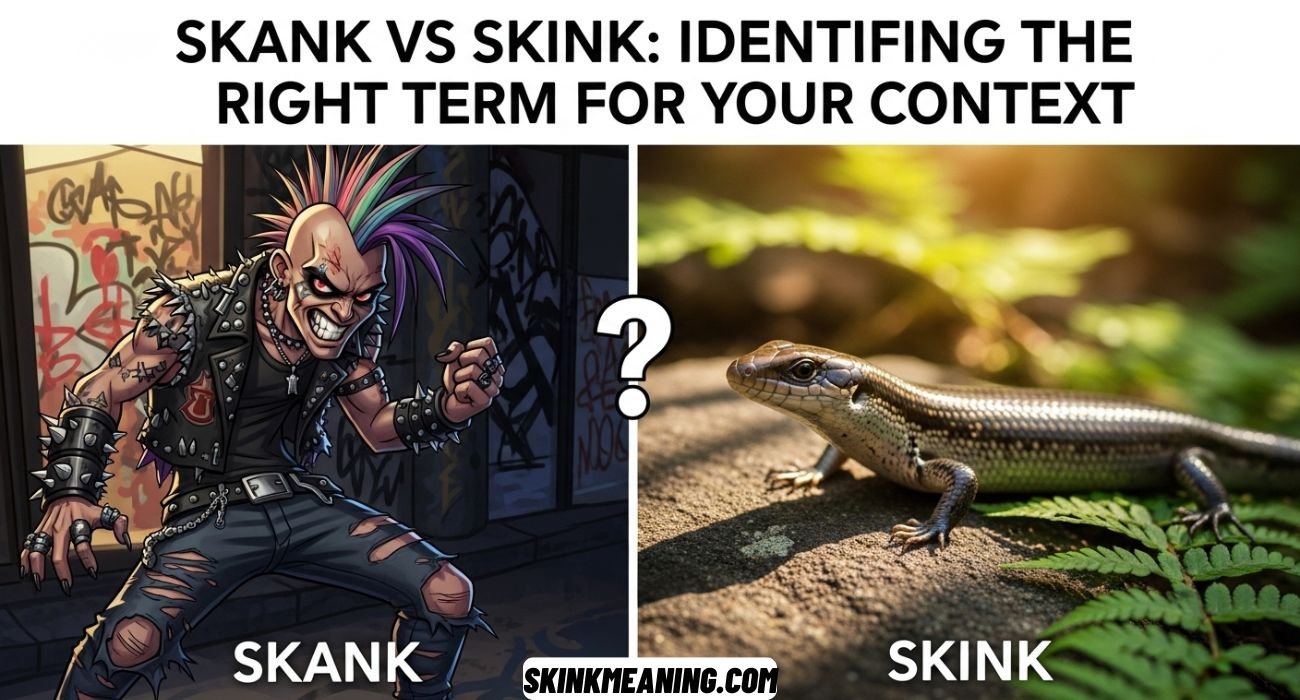
Skank vs Skink: Identifying the Right Term for Your Context
Skank vs Skink explains the difference between two English words that sound alike but mean very different things. Skank is a slang word with a negative and offensive meaning. Skink is the name of a real animal, which is a small type of lizard.
Many people confuse Skank vs Skink because the words sound almost the same when spoken. A small spelling mistake can change the meaning of a sentence completely. This confusion often causes problems in writing and communication.
Learning about Skank vs Skink helps students use the right word in the right place. It teaches the difference between slang and scientific terms. This knowledge helps improve clear, respectful, and correct English writing.
Understanding the Difference Between Skank and Skink
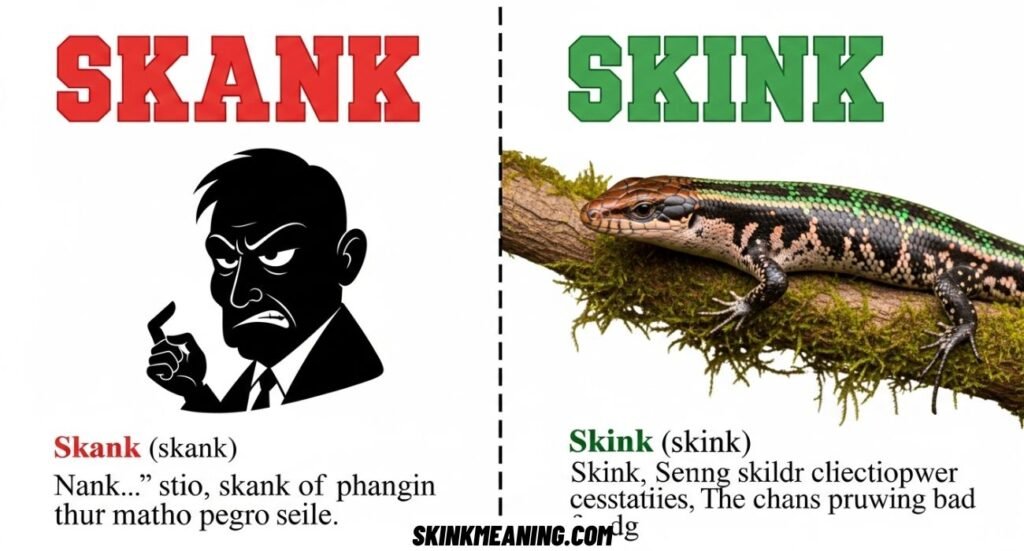
The core word meaning comparison between these two terms shows how far apart they really are. One belongs to offensive slang terms and social judgment, while the other belongs to animal terminology English and biology. This contrast is a strong example of how semantics in English and word connotations shape meaning.
What Does Skank Mean?
The skank meaning in modern American English comes from slang. The skank definition slang refers to a derogatory and insulting term, most often aimed at women. It is commonly used to shame someone based on appearance or perceived sexual behavior. Because of this, it appears often in discussions about sexist language in English and derogatory language examples.
While the word sometimes appears in music or pop culture, that does not remove its harmful tone. Understanding when to use skank is important, because in most real-life situations, the correct choice is not to use it at all. This word highlights the importance of language sensitivity and inclusive language usage, especially in professional, educational, or public conversations.
What Does Skink Mean?
The skink meaning is entirely different. The skink definition lizard describes a real animal. A skink is a type of lizard belonging to the lizard family Scincidae. There are many skink species, and several live in the United States, especially in the Southeast and Southwest.
Skinks are small to medium-sized reptiles known for smooth scales and fast movement. The word is neutral, scientific, and factual. Understanding when to use skink is simple because it is used in biology, wildlife education, and nature writing. This contrast clearly shows slang vs scientific terms and why context matters so much.
Skank vs Skink: Key Differences at a Glance
The table below highlights the most important English word differences between the two terms.
| Feature | Skank | Skink |
| Meaning | Slang insult | Type of lizard |
| Tone | Offensive and judgmental | Neutral and scientific |
| Category | Slang vs scientific terms | Animal terminology English |
| Social impact | Can cause harm or offense | No social harm |
| Usage context | Informal, often inappropriate | Educational or scientific |
This table shows why grammar word confusion between these words can be serious. One mistake can change the entire meaning of a sentence.
Why Context Matters in Choosing Skank or Skink
The phrase context in communication explains why similar sounding words can create major misunderstandings. English has many English homophones and similar sounding words, but few have consequences as strong as this pair. Using the wrong term can shift a sentence from harmless to offensive instantly.
This is why writers, students, and professionals must understand language nuance. Choosing words carefully helps avoid misused English words and supports respectful communication. This awareness is a key part of vocabulary building and effective writing.
How To Properly Use The Words In A Sentence
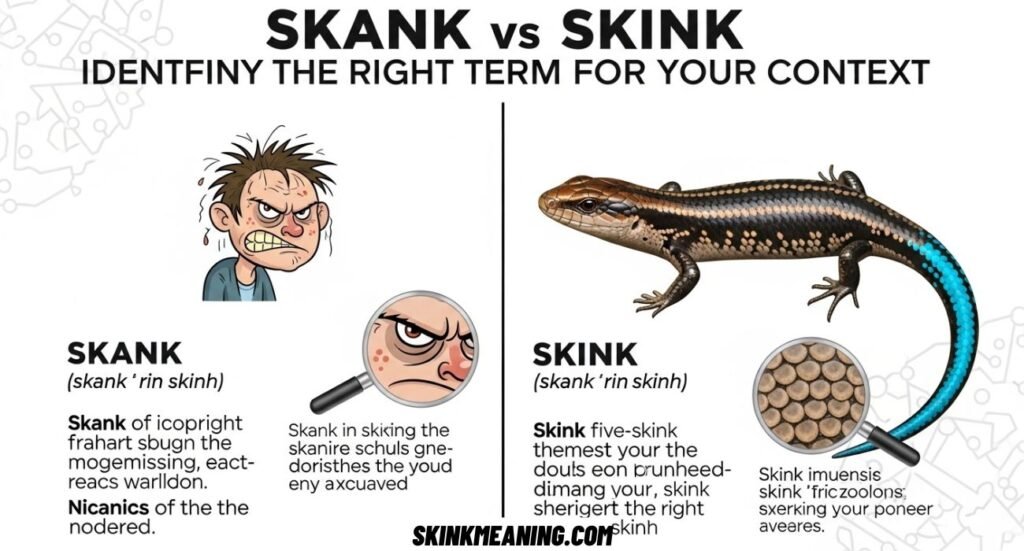
Learning how to use these words correctly requires understanding tone, audience, and intention. Proper sentence usage is one of the best ways to avoid grammar mistakes to avoid and embarrassing misunderstandings.
How To Use Skank In A Sentence
Using this word correctly means understanding that it is offensive. Most style guides and educators advise avoiding it entirely. If it appears in writing, it is usually in quoted speech, cultural analysis, or discussions about harmful language. This reflects informal vs formal language differences and reinforces why careful word choice matters.
How To Use Skink In A Sentence
Using this word is straightforward. It appears in factual statements about wildlife, biology, or pets. Because it is neutral, it fits well in educational writing and casual observation. This shows how animal names vs slang words operate differently in English.
More Examples Of Skank & Skink Used In Sentences
Looking at real sentences helps reinforce understanding and reduces grammar word confusion. These skank vs skink examples demonstrate how meaning changes based on word choice.
Examples Of Using Skank In A Sentence
In media studies, a critic may explain how the use of the word reflects harmful stereotypes. A teacher might discuss why the term is considered inappropriate in respectful conversation. These examples focus on education, not endorsement, and help readers understand skank and skink usage safely.
Examples Of Using Skink In A Sentence
A biologist may describe a skink basking in the sun. A homeowner might mention seeing a skink in the garden. These sentences are neutral and informative, reinforcing how word definitions explained can guide proper usage.
Common Mistakes To Avoid
Mistakes with these words often come from pronunciation similarities. Understanding these errors helps prevent confusion and supports better writing.
Mistake #1: Using Skank To Refer To A Type Of Lizard
This mistake usually happens when someone hears the word but has never seen it written. This error is not only incorrect but also inappropriate, showing why attention to spelling matters.
Mistake #2: Using Skink To Refer To A Promiscuous Woman
Although less offensive, this mistake still causes confusion. It highlights why similar sounding words must be checked carefully before use.
Mistake #3: Assuming Skank And Skink Are Synonyms
These words are not interchangeable. This assumption ignores tone, meaning, and cultural impact. Avoiding this error improves clarity and respect in communication.
Tips To Avoid Making These Mistakes
One effective method is checking a dictionary before using unfamiliar words. Reading examples in context also helps. Paying attention to audience and setting reinforces good habits and prevents misuse. These practices support better writing and long-term vocabulary building.
Skank vs Skink in American English: Cultural and Language Notes
In American culture, slang evolves quickly, but biology terms remain stable. This difference shows why understanding language change is important. Respectful communication depends on knowing which words belong in which situations. This awareness strengthens writing skills and promotes thoughtful expression.
Skank vs Skink: Why These Words Are Commonly Confused
The phrase skank vs skink represents one of the clearest examples of commonly confused words in American English. These words sound very similar when spoken, which often leads to mistakes in writing and conversation. This confusion usually happens because English has many similar sounding words that carry very different meanings and emotional weight.
Understanding the difference between skank and skink requires paying attention to spelling, context, and tone. One word belongs to slang and social judgment, while the other belongs to biology. This contrast shows how linguistic context matters and why careful word choice is essential for clear and respectful communication.
Read Also : Skink Lizard Symbolism and Meaning: Spiritual Messages
Skank Meaning and Its Social Impact
The skank meaning comes from slang, and the skank definition slang refers to a derogatory term often directed at women. It is commonly listed among offensive slang terms because it judges people based on appearance or behavior. This word often appears in discussions about sexist language in English and harmful stereotypes.
Because of its negative word connotations, the term is rarely appropriate in polite conversation. Understanding when to use skank usually means knowing when not to use it. Avoiding this word supports inclusive language usage and shows awareness of how language can harm or exclude others.
Skink Meaning in Biology and Nature
The skink meaning is neutral and scientific. The skink definition lizard refers to a reptile belonging to the lizard family Scincidae. There are many skink species, and several live in the United States. These lizards are known for smooth scales, small legs, and quick movement.
Unlike slang, this word has no emotional weight. It is commonly used in wildlife education and nature writing. Knowing when to use skink is simple because it fits clearly within animal terminology English and scientific discussion, making it safe and accurate in most contexts.
Slang vs Scientific Terms in English
The contrast between these words highlights slang vs scientific terms in English. Slang often changes over time and carries emotional meaning, while scientific terms remain stable and factual. This difference explains why confusing these words can cause misunderstanding or offense.
Learning this distinction helps improve vocabulary building and supports better communication. Writers who understand language nuance are less likely to misuse words. This awareness reduces grammar word confusion and strengthens clarity in both spoken and written English.
Correct Word Usage and Context in Communication
Correct word usage depends heavily on context in communication. Using the wrong word can change the entire meaning of a sentence. This is especially true with English homophones and words that sound alike but belong to different categories.
Understanding audience and setting helps prevent misused English words. Formal writing, education, and professional settings require careful language choices. Recognizing tone and intent helps writers avoid mistakes and improves overall clarity and credibility.
Skank vs Skink Examples in Real Writing
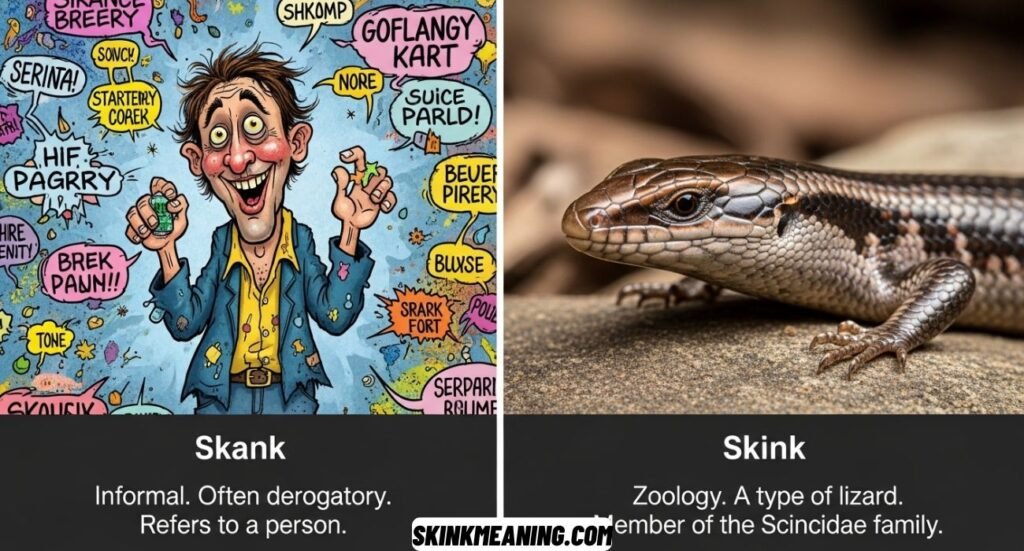
Looking at skank vs skink examples helps clarify how these words function differently. In academic writing, the slang term may appear only in analysis or quotation. In contrast, the animal term appears in factual descriptions of wildlife or biology.
These examples show how skank and skink usage changes meaning instantly. One word can offend, while the other informs. This comparison reinforces the importance of understanding semantics in English and choosing words that match the intended message.
Grammar Mistakes to Avoid with Similar Words
Many grammar mistakes to avoid happen because writers rely on sound instead of spelling. This is common with confusing English terms that look or sound alike. Skank and skink are a perfect example of this issue.
Careful proofreading and dictionary use can prevent these errors. Paying attention to word definitions helps writers avoid embarrassment and misunderstanding. These habits improve accuracy and support long-term language confidence.
Improving Language Sensitivity and Awareness
Learning the difference between these words encourages language sensitivity and respect. Choosing words carefully shows awareness of social impact and helps avoid unnecessary harm. This is especially important when dealing with slang or emotionally charged terms.
By understanding animal names vs slang words, writers become more thoughtful communicators. This awareness improves writing quality and supports clearer, more respectful expression in everyday English.
FAQs
Is it skink or skank?
It is skink when referring to an animal, while skank is a slang word and not used for animals.
What animal is called a skank?
No animal is called a skank; the correct animal term is skink, which is a type of lizard.
Is a skink poisonous?
No, skinks are not poisonous and are generally harmless to humans.
Is a skink a skunk?
No, a skink is a lizard, and a skunk is a mammal; they are completely different species.
Final Thoughts on Skank vs Skink
The topic Skank vs Skink shows how important word choice is in English. These two words sound alike, but they have very different meanings. One word belongs to slang and can hurt people. The other word names a real animal and belongs to science. When writers understand this difference, they communicate clearly and avoid mistakes. Learning correct meanings builds strong language skills and helps readers trust the message. Careful word use also shows respect for others and supports clear writing in school and daily life.
Understanding Skank vs Skink also helps students grow their vocabulary with confidence. Good writers choose words that match the topic and setting. Scientific words fit learning and nature topics. Slang words do not fit formal or respectful writing. This knowledge helps students write better sentences and avoid confusion. Clear language improves reading, writing, and speaking skills. Strong word choices lead to better communication and better learning outcomes.