
Skink Meaning – Complete Guide to the Word and the Lizard
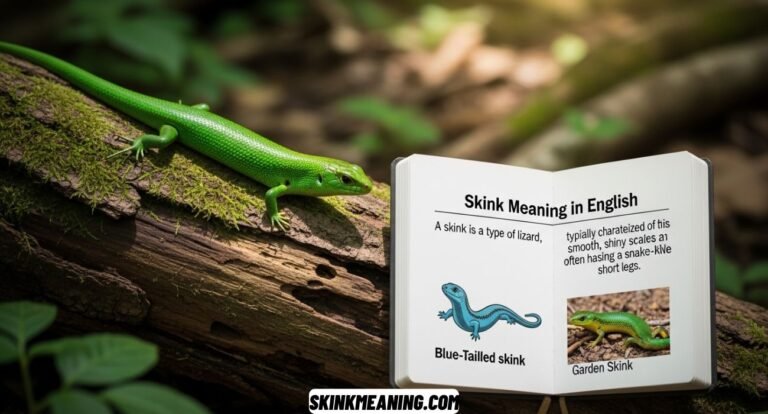
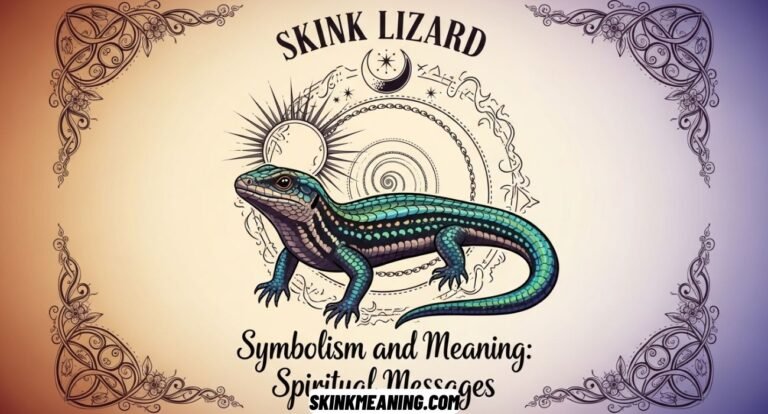
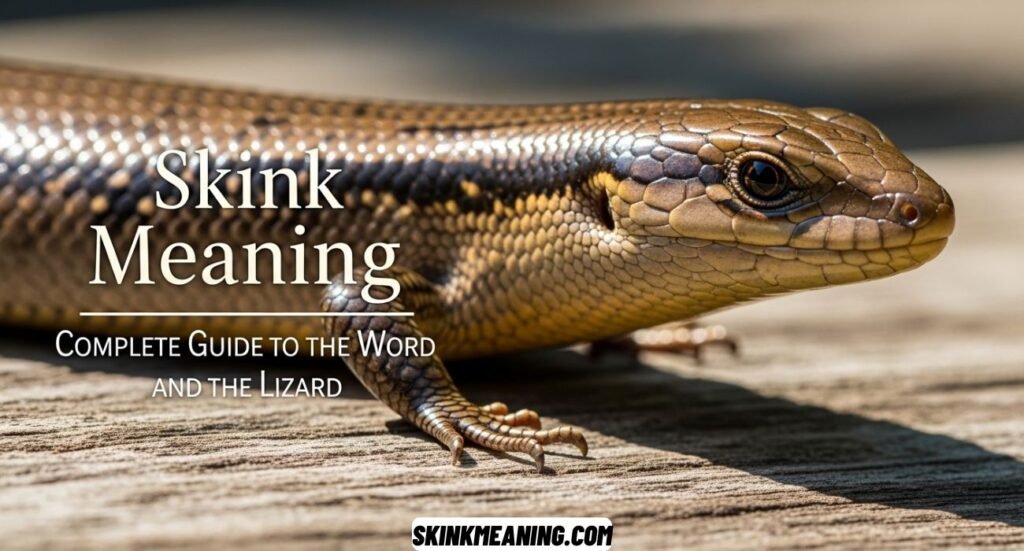
The Skink Meaning Lizard refers to a smooth-scaled reptile with a long body and short legs. It belongs to the skink family found in many warm regions. People often use the word skink to describe this type of lizard.
The Skink Meaning Lizard attracts attention because many people confuse it with snakes. Its shiny skin and fast movement make it interesting to watch. This simple lizard often surprises people in gardens and forests.
The Skink Meaning Lizard lives in forests, grasslands, and near homes. It eats insects and helps keep nature balanced. Many skinks live quietly without disturbing people.
What Does Skink Mean?
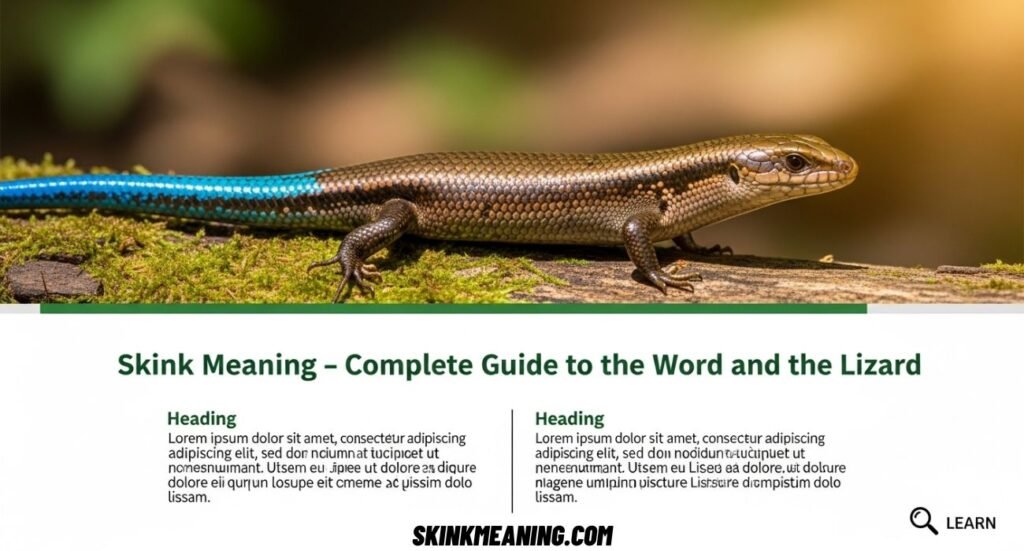
The most common skink meaning today refers to a type of small to medium-sized lizard that belongs to the family Scincidae. In American English, when people say “skink,” they are usually talking about the reptile rather than the older word meanings. Skinks are known for their smooth, shiny scales and snake-like movement, which often causes people to confuse them with snakes.
At the same time, the word skink also exists in the English language as a noun and verb with historical meanings. These older uses are less common in modern American speech but still appear in dictionaries and literature. Understanding what skink means requires looking at both its language definition and its biological meaning.
Definition of the Word “Skink”
In standard English dictionaries, the definition of the word “skink” includes more than one meaning. One definition refers to a reptile, while another refers to older, less-used meanings related to pouring or serving drinks. In modern usage, especially in the United States, the animal-related definition is by far the most popular.
In simple terms, skink means a type of lizard with smooth scales, short legs, and a long body. The word may also appear in historical texts where it describes someone who serves drinks or pours liquids, but this meaning is mostly outdated and rarely used today.
Origin and Etymology of Skink
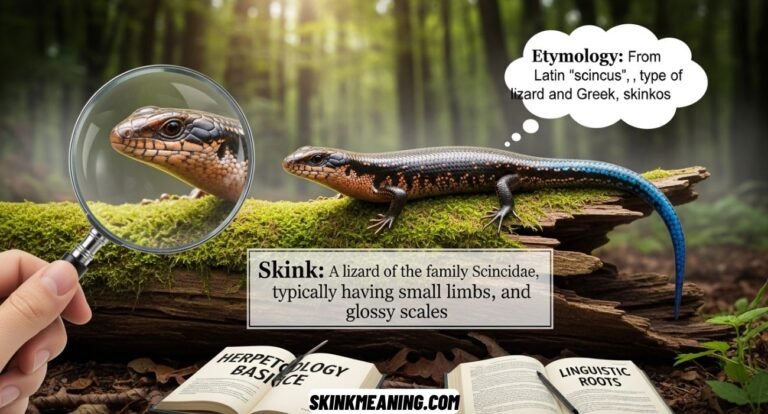
The origin and etymology of skink can be traced back to ancient languages. The word comes from the Greek word skinkos, which referred to a type of lizard believed to have healing properties. This Greek term passed into Latin as scincus and later into Old French and Middle English.
During medieval times, skinks were sometimes used in traditional medicine, and the word became associated with both the animal and medicinal practices. Over time, English speakers simplified the spelling and pronunciation, eventually settling on the modern word skink. This long journey explains why the word has both biological and historical meanings.
Skink Meaning in English Language
The skink meaning in English language has evolved significantly. In earlier centuries, the word appeared in poetry, medical writings, and everyday speech with meanings unrelated to reptiles. In present-day American English, however, the reptile meaning dominates completely.
Most English speakers today understand skink as a lizard species rather than a verb or occupational term. This shift shows how language adapts to cultural relevance, with wildlife education and environmental awareness playing a major role in keeping the reptile meaning alive.
Dictionary Meaning of Skink
The dictionary meaning of skink usually lists two main entries. One entry defines skink as a lizard belonging to the family Scincidae. Another entry defines skink as an old verb meaning to pour or serve liquid, especially alcohol. American dictionaries often mark this second meaning as archaic.
Below is a simple table showing how dictionaries commonly define the word skink.
| Dictionary Entry | Meaning | Modern Usage |
| Skink (noun) | A smooth-scaled lizard | Very common |
| Skink (verb) | To pour or serve drinks | Rare or obsolete |
This table clearly shows why most people associate the skink meaning with lizards today.
Skink Meaning in Different Contexts
The skink meaning in different contexts depends on whether the word is used in biology, language, or literature. In biology, skink refers strictly to a reptile species. In language studies, it may appear as an example of an archaic English word. In education and media, skinks are often used to teach children about reptiles and ecosystems.
For example, in a wildlife documentary, the word skink always refers to the lizard. In an old English poem, skink might describe someone serving wine. Context is the key to understanding which meaning applies.
What Is a Skink Lizard?
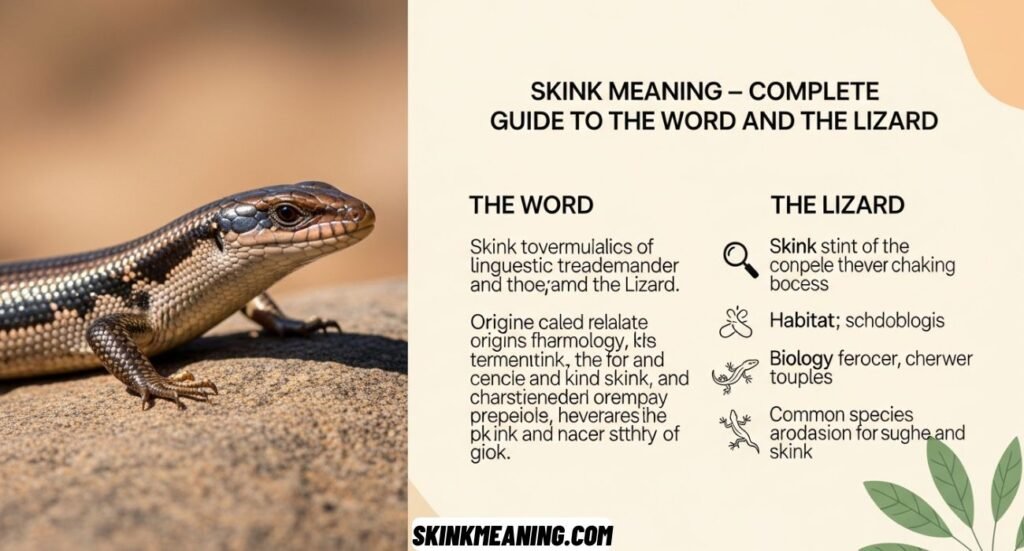
A skink lizard is a reptile that belongs to the family Scincidae, which includes over 1,500 species worldwide. Skinks are found on almost every continent, including North America. In the United States, skinks are common in forests, grasslands, deserts, and even suburban areas.
The skink lizard meaning focuses on physical traits such as smooth scales, a cylindrical body, and short legs. Some skinks even appear legless, making them resemble snakes. Despite this appearance, skinks are true lizards with eyelids and external ear openings.
Scientific Classification of Skinks
The scientific classification of skinks places them within the reptile family tree. Skinks are part of the animal kingdom and belong to a specific reptile group known for adaptability and survival skills.
| Classification Level | Category |
| Kingdom | Animalia |
| Phylum | Chordata |
| Class | Reptilia |
| Order | Squamata |
| Family | Scincidae |
This classification explains why skinks share traits with other lizards while still being unique.
Physical Characteristics of Skink Lizards
The physical characteristics of skink lizards make them easy to identify. Skinks have smooth, shiny scales that reduce friction and help them move quickly through grass, sand, and soil. Their bodies are usually long and narrow, with short legs that may be barely visible.
Most skinks have strong tails that can detach when threatened, a defense mechanism called autotomy. This allows the skink to escape predators while the tail continues to move. Many skinks also have excellent camouflage, blending into their environment with brown, gray, or green coloring.
Types of Skink Lizards

There are many types of skink lizards, ranging from very small species to large, heavy-bodied ones. Some skinks live underground, while others climb trees or bask in open sunlight. The diversity of skinks is one reason the skink lizard meaning is so important in biology.
Skinks vary greatly in size, color, and habitat, but they all share similar body structures and behaviors that define the group.
Common Skink Species Around the World
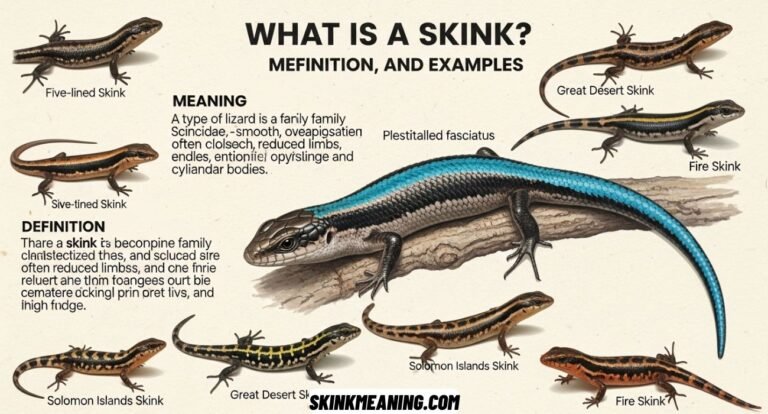
Several common skink species around the world are well known to scientists and nature enthusiasts. In the United States, the five-lined skink is one of the most recognized species. In Australia, blue-tongued skinks are famous for their size and bright blue tongues.
Other common species include the sand skink, garden skink, and fire skink. These species play important roles in ecosystems by controlling insect populations and serving as prey for larger animals.
Rare and Exotic Skink Varieties
Some skinks are considered rare and exotic skink varieties due to their limited habitat or unique appearance. Examples include the Solomon Islands skink, one of the largest skinks in the world, and certain island species that exist nowhere else on Earth.
These rare skinks are often protected by conservation laws because habitat loss and climate change threaten their survival. Studying them helps scientists understand evolution and environmental adaptation.
Habitat and Behavior of Skinks
The habitat and behavior of skinks vary widely depending on species. Skinks can live in forests, deserts, grasslands, wetlands, and urban areas. They are generally shy animals that prefer to hide under rocks, logs, or leaves.
Skinks are mostly active during the day and rely on sunlight to regulate their body temperature. Their behavior includes basking, hunting insects, and avoiding predators through quick movement and camouflage.
Where Do Skinks Live?
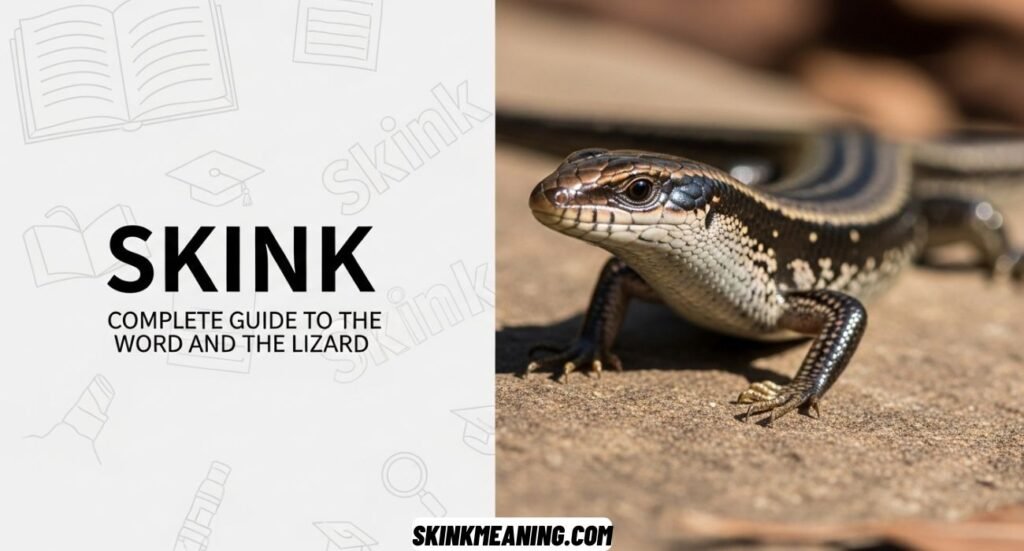
When asking where do skinks live, the answer is almost everywhere except extremely cold regions. In the United States, skinks are commonly found in the Southeast, Midwest, and parts of the Southwest. They prefer warm climates but can adapt to many environments.
Skinks often choose habitats with loose soil or leaf litter, which allows them to burrow and hide easily. This adaptability explains why skinks are among the most widespread lizards in the world.
Skink Diet, Behavior, and Lifespan
The skink diet, behavior, and lifespan are closely connected. Skinks are mostly insectivores, meaning they eat insects such as beetles, ants, spiders, and crickets. Some larger skinks also eat fruits, plants, or small animals.
In terms of behavior, skinks are generally non-aggressive and prefer to flee rather than fight. Their average lifespan ranges from five to twenty years, depending on species and environment. In captivity, some skinks live even longer with proper care.
A wildlife biologist once described skinks by saying, “Skinks are quiet survivors, perfectly designed for life on the ground.” This quote highlights why skinks have remained successful for millions of years.
Read Also : Skink Meaning Uncovered: From Lizard Species to Word Definition
Skink Meaning in Modern English Usage
The skink meaning in modern English is most commonly linked to reptiles rather than language history. In the United States, the word skink is widely understood as a type of smooth-scaled lizard found in nature, wildlife shows, and biology textbooks. This meaning dominates everyday conversation, education, and online searches related to animals and reptiles.
Although the word once had other meanings, modern English has narrowed its usage. Today, when Americans hear the word skink, they almost always imagine a small, fast-moving lizard. This shift shows how language naturally evolves based on culture, relevance, and common exposure through media and education.
Skink Meaning in Dictionaries and Reference Books
The skink meaning in dictionaries usually includes more than one definition. Most modern dictionaries list skink primarily as a noun describing a lizard from the Scincidae family. This definition is clear, scientific, and widely accepted across American and international English references.
Some dictionaries also include an older definition of skink as a verb meaning to pour or serve drinks. However, this meaning is labeled as archaic and is rarely used today. For most readers, the dictionary meaning of skink strongly aligns with reptiles and wildlife.
Historical Background Behind the Word Skink
The historical skink meaning dates back to ancient Greek and Latin languages. Early cultures believed certain skink lizards had medicinal properties, which helped the word spread through medical and scholarly texts. Over centuries, the word traveled across Europe and eventually entered English vocabulary.
As time passed, the medicinal and occupational meanings faded. The reptile meaning survived because skinks remained visible in nature and science. This history explains why the word skink carries both linguistic depth and biological importance today.
What Makes Skink Lizards Unique
Skink lizards stand out due to their smooth, shiny scales and elongated bodies. Unlike many lizards, skinks move with a flowing, snake-like motion that helps them escape predators quickly. This physical design makes them highly efficient at living on the ground and burrowing underground.
Another unique feature of skinks is their ability to drop their tails when threatened. This defense behavior allows them to survive dangerous encounters. These traits help explain why skinks have existed for millions of years across many environments.
Skink Meaning in Biology and Science
In biology, the skink meaning is precise and scientific. Skinks are reptiles classified under the family Scincidae, which includes more than 1,500 species worldwide. Scientists study skinks to understand evolution, adaptation, and reptile behavior across different climates.
Because skinks live in forests, deserts, and urban areas, they are valuable indicators of environmental health. Their presence helps researchers learn how ecosystems function and respond to change, making skinks important beyond their simple definition.
Skinks in the United States and North America
In the United States, skinks are commonly found in warm regions such as the Southeast and Midwest. The five-lined skink is one of the most recognized species, often seen in backyards, parks, and wooded areas. This visibility makes skinks familiar to many Americans.
North American skinks play a key role in controlling insect populations. By feeding on pests, they support ecological balance. Their presence near human homes also helps people connect with wildlife on a local level.
Cultural and Educational Importance of Skinks
Skinks appear frequently in educational materials, zoos, and nature programs. Teachers and wildlife educators use skinks to introduce students to reptiles because they are harmless and easy to observe. This makes skinks valuable tools for learning and awareness.
Culturally, skinks help reduce fear of reptiles. Seeing skinks as calm, useful animals encourages respect for nature. Their role in education strengthens the positive modern skink meaning as a symbol of adaptation and survival.
Why Understanding Skink Meaning Matters
Understanding the skink meaning helps avoid confusion between language history and biology. Knowing the correct context allows readers, students, and writers to use the word accurately and confidently. This is especially important in education, science, and content creation.
Learning about skinks also builds appreciation for biodiversity. When people understand what a skink is and why it matters, they are more likely to value wildlife conservation. The word skink becomes a gateway to learning about nature and language together.
FAQs
What is the meaning of the skink lizard?
The skink lizard is a type of smooth-scaled reptile from the Scincidae family with a long body and short legs. It is commonly found in warm environments and is known for its quick movement.
What exactly is a skink?
A skink is a lizard species recognized by its shiny scales and snake-like appearance. There are more than 1,500 skink species living across different parts of the world.
Is it okay to touch skinks?
Touching skinks in the wild is not recommended because it can cause stress or tail loss. Skinks are harmless but should be observed from a distance.
Are skink lizards friendly?
Skink lizards are calm and non-aggressive but not friendly like domesticated animals. They usually avoid humans and escape when approached.
Conclusion
The Skink Meaning Lizard connects language and nature in a simple and clear way. The word skink mainly refers to a smooth-scaled lizard that lives in many warm places, including the United States. These lizards move fast, hide well, and help control insects in the environment. The word also has an old language history, but today most people use it to talk about the animal. Learning the skink meaning helps students understand science and English together.
The Skink Meaning Lizard also teaches respect for wildlife. Skinks do not harm people and play an important role in nature. They survive by hiding, running quickly, and living quietly near humans. When students learn about skinks, they gain knowledge about animals, habitats, and balance in nature. This understanding builds care for living things and supports learning in a simple and meaningful way.