Skink Meaning Explained: What It Is and Why the Word Matters
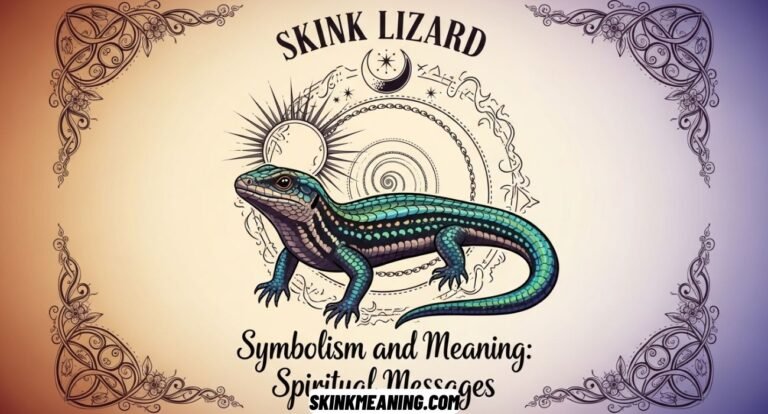
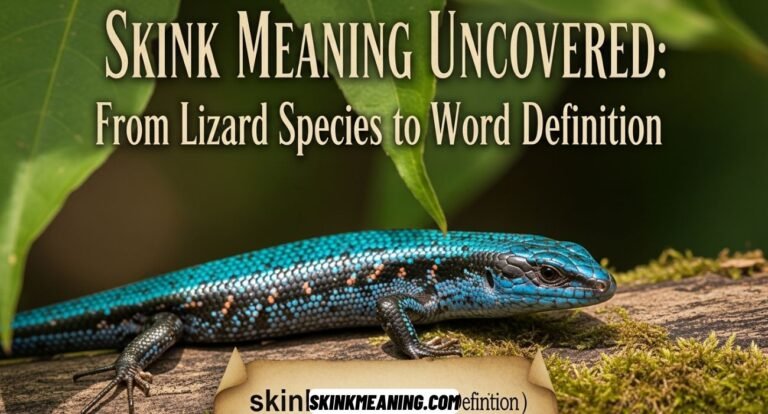
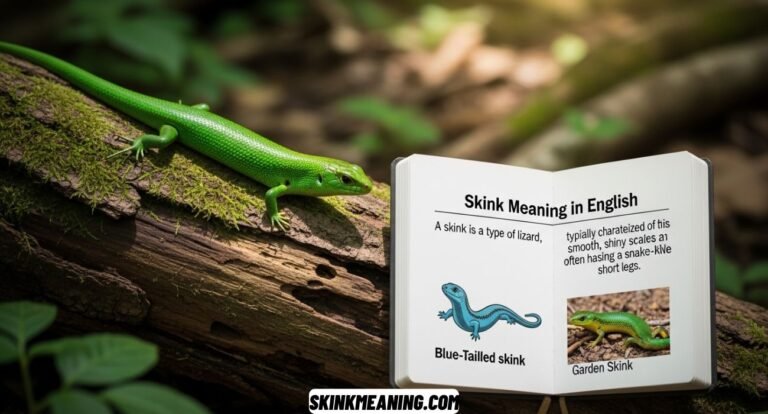
Skink Meaning Explained shows the clear meaning of the word skink in simple English. A skink is a small lizard with smooth skin and a long body. People mostly use this word when talking about animals and nature.
Many people see a skink in gardens or parks but do not know its name. The word sounds short and simple but carries an interesting meaning. Learning this word helps readers enjoy science and language more.
Skink Meaning Explained also gives useful facts about the word and the animal. It explains where the word comes from and how people use it today. This information helps students understand nature and improve vocabulary.
Skink Meaning: A Simple and Clear Definition
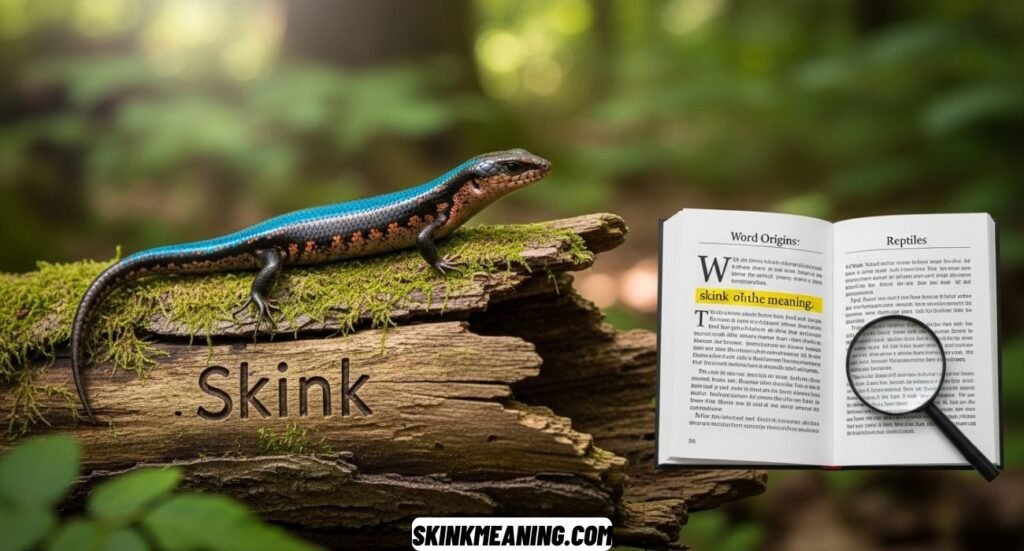
At its most basic level, the skink meaning refers to a specific type of reptile. A skink is a smooth-bodied lizard with short legs, a long tail, and shiny scales. In dictionaries, skink is primarily defined as a lizard belonging to the family Scincidae. However, older English usage shows that the word once had additional meanings that are now rare or outdated.
In simple terms, the word skink can be understood in two main ways. First, it refers to a real animal found in nature. Second, it appears in language history and informal speech with meanings that are less common today. Modern English, especially American English, focuses almost entirely on the animal meaning.
What Does the Word Skink Mean?
The word skink means a type of lizard known for its sleek body and quick movement. Skinks are reptiles, cold-blooded animals that often live in warm climates. They are harmless to humans and play an important role in controlling insects.
From a language perspective, the word skink is a noun. It is pronounced as “skink,” rhyming with think or link. In older English texts, the word sometimes appeared as a verb or descriptive term, but those meanings are no longer used in everyday speech.
Skink Meaning in Modern English
In modern American English, the skink meaning is very clear and specific. When people hear the word skink, they almost always think of a small lizard. This clarity makes the word easy to understand today, even if its history is more complex.
Modern usage of skink appears mostly in educational materials, wildlife guides, documentaries, and nature-related writing. Children often learn the word when studying animals, and adults may encounter it when reading about backyard wildlife or visiting national parks. Unlike many animal names, skink has not become heavily metaphorical or symbolic in modern speech.
Origin and History of the Word Skink
To fully understand the meaning of skink, it helps to look at where the word came from. Like many English words, skink has traveled across languages and centuries before arriving at its current meaning.
Etymology of Skink
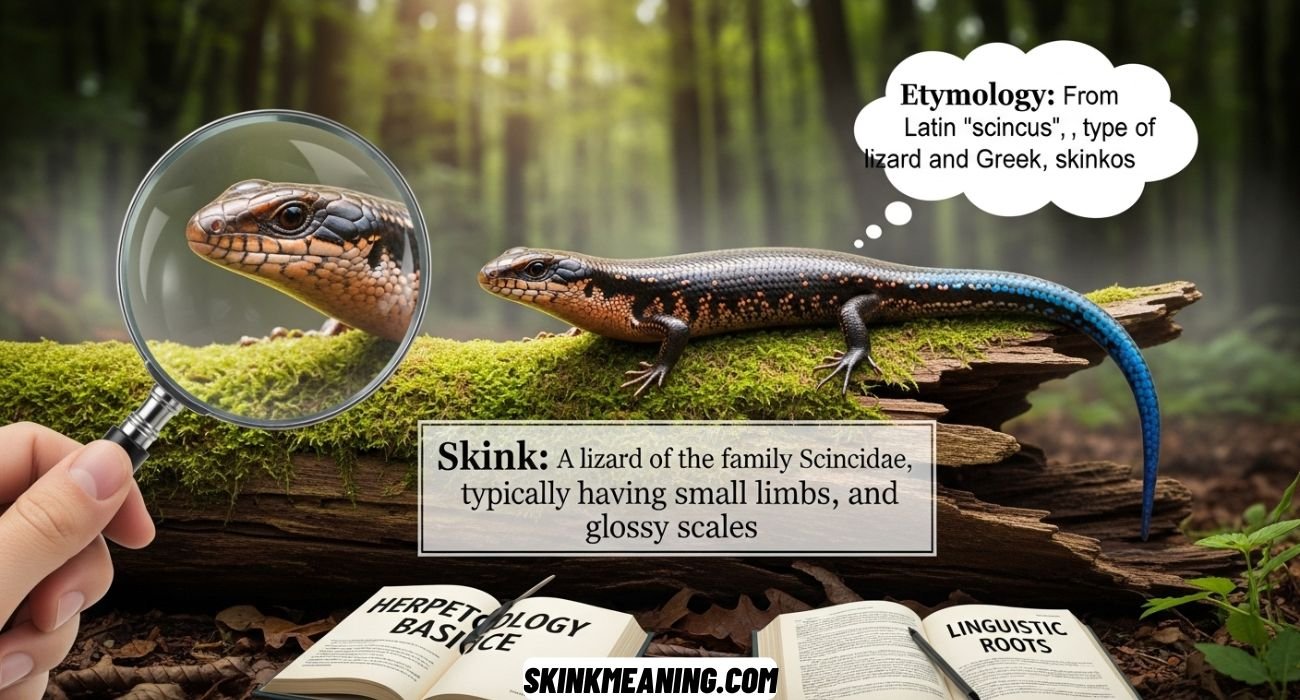
The word skink comes from ancient linguistic roots. It can be traced back to Greek and Latin origins, where similar words were used to describe certain reptiles. These early terms were later adopted into Old French and Middle English.
Historically, the word was sometimes associated with medicinal beliefs. In medieval Europe, skinks were believed to have healing properties, and dried skinks were even used in traditional medicine. While these beliefs are no longer accepted, they show how the word once carried cultural importance beyond biology.
How the Meaning of Skink Has Changed Over Time
The meaning of skink has become more focused over time. In earlier centuries, it was a broader term connected to folklore, medicine, and exotic animals. As scientific classification improved, the word became more precise and was limited to a specific family of lizards.
This shift reflects a larger trend in language, where scientific knowledge narrows and clarifies word meanings. Today, the skink meaning is stable and well-defined, showing how language evolves alongside human understanding.
Skink as an Animal
The most common and important meaning of skink today relates to the animal itself. Skinks are among the most widespread lizards in the world and are especially interesting due to their adaptability and behavior.
What Is a Skink Lizard?
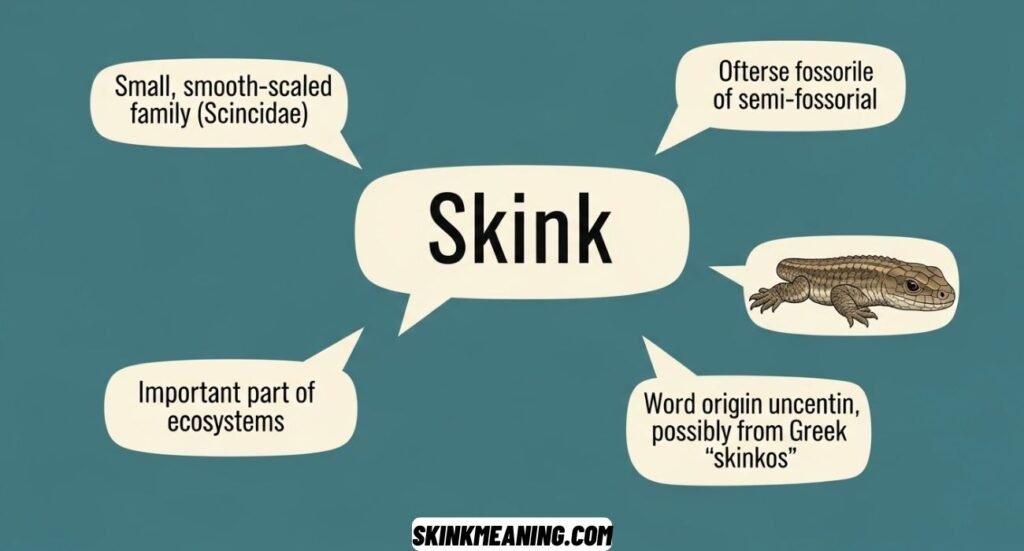
A skink lizard is a reptile known for its smooth, shiny scales and snake-like movement. Unlike many lizards, skinks often have very small legs, and some species appear almost legless. They move quickly and can hide easily, which helps them survive predators.
In the United States, skinks are often found in wooded areas, gardens, and near rocks or logs. They are not aggressive and usually avoid human contact. Many American homeowners are surprised to learn that skinks help reduce insect populations naturally.
Types of Skinks Found Around the World
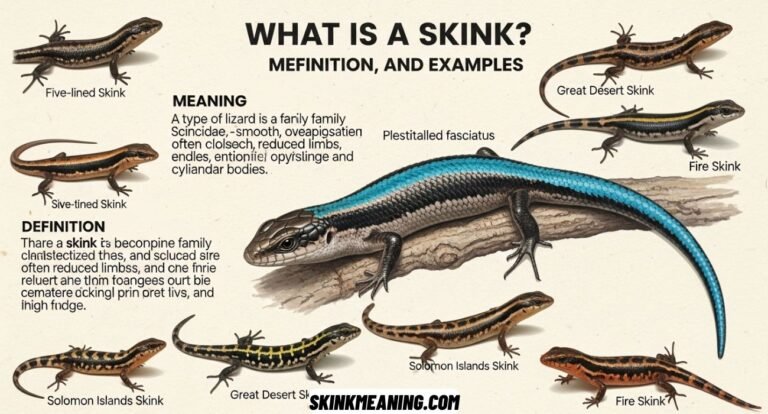
There are more than 1,500 known species of skinks, making them one of the largest lizard families on Earth. They live on nearly every continent except Antarctica.
Below is a simple table showing examples of skinks found in different regions:
| Region | Common Skink Species | Notable Feature |
| United States | Five-lined skink | Bright blue tail in juveniles |
| Australia | Blue-tongued skink | Thick body and blue tongue |
| Africa | Fire skink | Bright red and orange coloring |
| Asia | Sun skink | Active during daylight |
This global presence shows why the word skink appears so often in scientific and educational writing.
Skink Meaning in Slang and Informal Use
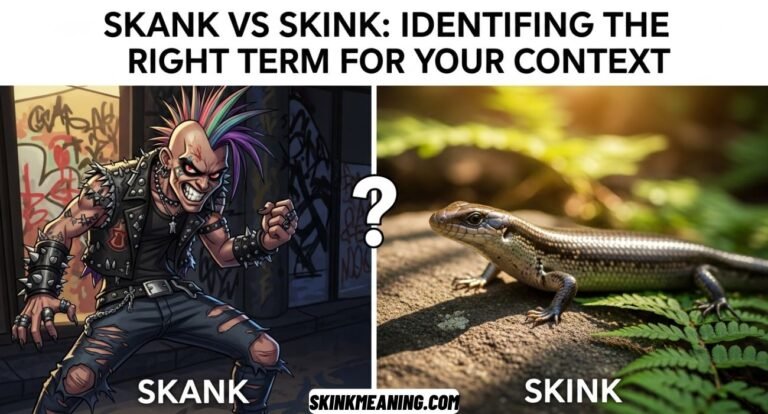
Unlike many animal names, skink is not widely used as slang in modern American English. However, it has appeared in informal or regional speech in the past.
Is Skink Used as Slang?
In some historical contexts, skink was used as a slang term, but these meanings are now considered obsolete. Today, most Americans would not recognize skink as slang. This makes the word relatively neutral and safe from misunderstanding.
The lack of strong slang meaning actually helps preserve the clarity of the skink meaning, especially in education and science.
Read Also : Skink Meaning – Complete Guide to the Word and the Lizard
Regional and Cultural Variations of the Word Skink
Different cultures understand skink primarily through the animals they encounter locally. In the U.S., skinks are small and subtle, so the word carries a calm and neutral tone. In Australia, where skinks can be large and more noticeable, the word may feel more familiar and significant.
Despite these differences, the meaning remains consistent across English-speaking regions.
How Skink Is Used in Sentences
The word skink is most often used in simple, descriptive sentences. For example, people may talk about seeing a skink in their backyard or reading about skinks in a science book.
Common Examples of Skink in Everyday Language
Here are a few natural sentence examples that show how the word is used:
A skink ran across the stone path and disappeared under a leaf.
The teacher explained how skinks help control insect populations.
Children were excited to spot a skink during their nature walk.
These examples show that skink is usually used in factual or observational contexts.
Skink Meaning in Literature and Media
Skinks appear occasionally in books, documentaries, and nature programs. They are often used to represent small but important creatures in ecosystems. While not as famous as snakes or dragons, skinks are valued for their realism and educational value.
Nature writers often describe skinks as symbols of adaptation and survival. This gives the word a subtle but meaningful place in storytelling.
Why the Word Skink Matters Today
Words matter because they shape how we understand the world. The word skink connects language to science and nature in a direct and meaningful way.
Skink in Language, Science, and Pop Culture
In science, the word skink is essential for classification and research. In language, it shows how words can become more precise over time. In pop culture, skinks appear in wildlife shows and educational media, helping people learn about biodiversity.
A well-known quote from naturalist E.O. Wilson fits well here:
“Every species is a masterpiece of evolution.”
Skinks may be small, but they represent this idea perfectly.
Why Understanding Skink Meaning Is Important
Understanding the skink meaning helps improve vocabulary, supports science education, and encourages respect for wildlife. It reminds us that even simple words have stories behind them and roles to play in communication.
By learning what skink means and why it matters, we become better readers, speakers, and observers of the natural world.
Skink Meaning Explained in Simple Terms
The word skink is commonly used to describe a small type of lizard, but its meaning is often misunderstood. In simple English, a skink is a reptile with smooth, shiny skin and a long tail. Many people in the United States encounter skinks in gardens or parks without knowing their proper name or meaning.
Understanding the skink meaning helps clear confusion and builds better vocabulary. It also shows how one word can connect nature, language, and education. Even though skinks are small animals, the word itself has importance in science and everyday language.
What Does the Word Skink Mean?
The word skink refers to a reptile belonging to the skink family, known scientifically as Scincidae. These lizards are known for their sleek bodies and fast movement. The skink meaning is mostly used in a biological and educational context today.
In older English, the word had broader uses, but those meanings have faded. In modern American English, when someone says skink, they almost always mean the lizard. This makes the word easy to understand and use correctly.
Skink Meaning in Modern English Usage
In modern English, especially in the United States, the skink meaning is very clear and specific. It is mainly used in wildlife discussions, school textbooks, and nature documentaries. People rarely use the word in slang or casual metaphorical speech.
Because the word has a single strong meaning today, it avoids confusion. This clarity makes skink a good example of how language becomes more precise over time as scientific knowledge improves.
Origin and History of the Word Skink
The history of the word skink goes back hundreds of years. It originally came from Greek and Latin words that described certain reptiles. These early meanings were passed into Middle English through European languages.
In medieval times, skinks were believed to have medical value, and the word appeared in old remedies and writings. Although those beliefs are no longer accepted, they show how the skink meaning has changed through history.
Skink as an Animal in Nature
As an animal, a skink is a harmless and helpful lizard. Skinks eat insects, spiders, and small pests, which helps keep ecosystems balanced. They are usually shy and avoid humans whenever possible.
In the United States, common skinks live in forests, fields, and suburban areas. Learning about skinks helps people appreciate local wildlife and understand that not all lizards are dangerous or aggressive.
Types of Skinks Found Around the World
There are over 1,500 species of skinks found across the world. They live in North America, Africa, Asia, Australia, and many islands. Each species has adapted to its environment in unique ways.
Some skinks are small and thin, while others are large and thick-bodied. This wide variety shows why the skink meaning is important in biology, as it represents one of the most diverse reptile families on Earth.
Skink Meaning in Slang and Informal Language
The word skink is rarely used as slang in modern American English. In the past, it had informal meanings, but those uses are now outdated and mostly forgotten. Today, slang dictionaries rarely include the word.
This lack of slang use keeps the skink meaning neutral and educational. People can use the word without worrying about negative or confusing interpretations, especially in classrooms and writing.
Why the Word Skink Matters Today
The word skink matters because it connects language with science and nature. It helps people name and understand a real living creature that plays an important role in the environment. Words like skink support learning and awareness.
Understanding the skink meaning also reminds us that language evolves. Even small, simple words can carry history, knowledge, and importance, making them valuable in communication and education today.
FAQs
What does skink mean?
A skink is a type of small lizard with smooth, shiny scales and a long body, commonly found in warm regions.
What exactly is a skink?
A skink is a reptile from the Scincidae family, known for short legs, fast movement, and ground-dwelling behavior.
What do skinks represent?
Skinks often represent adaptability, survival, and balance in nature due to their ability to live in many environments.
What does it mean to describe someone as a skink?
Describing someone as a skink is uncommon in modern English and may loosely suggest sneakiness or smallness depending on context.
Conclusion
Skink Meaning Explained shows that the word skink has a clear and useful meaning. A skink is a small lizard with smooth skin and quick movement. People in the United States mostly use this word for the animal. The word has a long history, but modern English gives it one strong meaning. Learning this word helps students understand science and nature better. It also helps readers improve their vocabulary in a simple way. Words like skink connect language with real life and the natural world.
This conclusion of Skink Meaning Explained also shows why the word matters today. Skinks play an important role in nature by eating insects and keeping balance. The word helps scientists, teachers, and students talk clearly about animals. Clear words support learning and understanding. When students know the meaning of skink, they feel more confident while reading or studying. Simple words with clear meanings help young learners grow knowledge step by step.