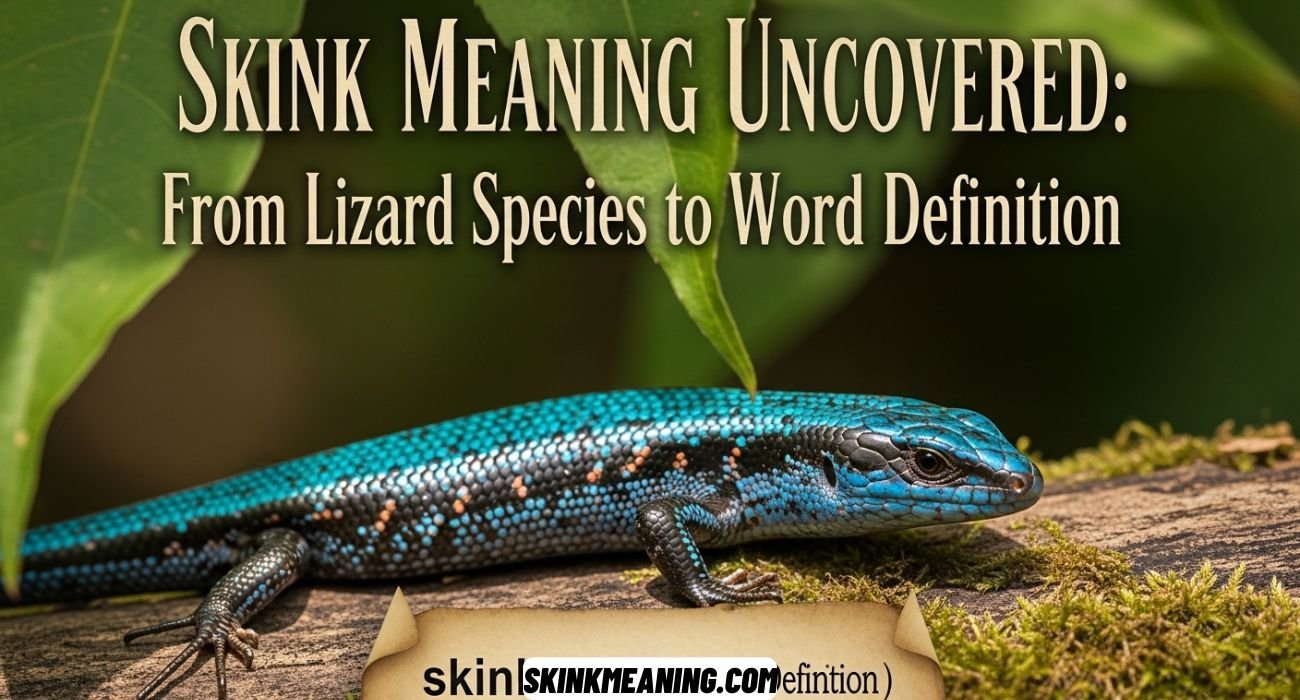
Skink Meaning Uncovered: From Lizard Species to Word Definition
Skink Meaning Uncovered explains what the word skink truly means. It covers the animal and the word definition together. The topic focuses on clear and simple understanding.
Skink Meaning Uncovered helps readers learn something new and interesting. Many people see skinks but do not know their meaning. This topic makes learning easy and engaging.
Skink Meaning Uncovered shares facts about skinks and language use. It connects nature, science, and words in one place. The topic supports learning with simple and clear information.
What Is the Meaning of Skink?
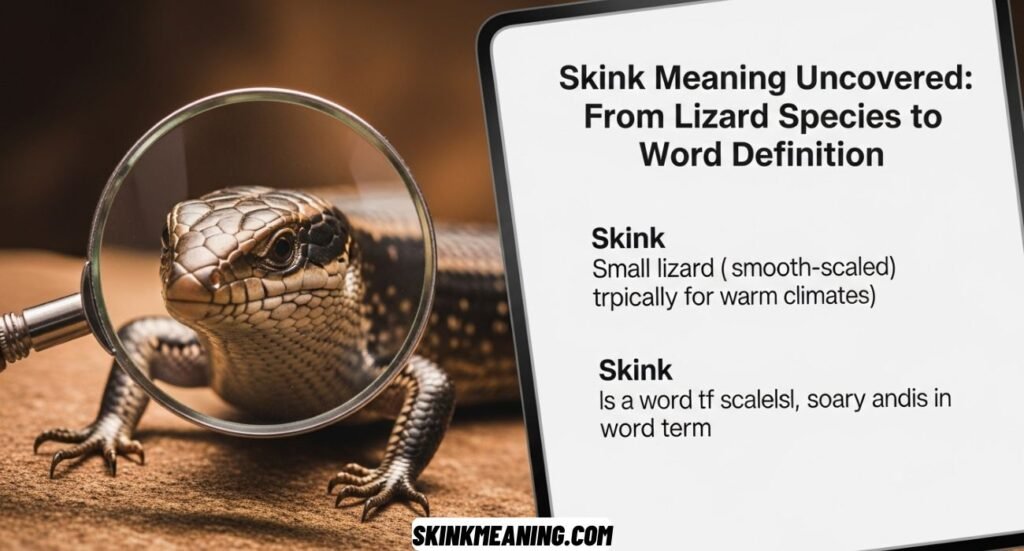
The basic meaning of skink depends on the context in which it is used. In zoology, a skink is a smooth-bodied lizard belonging to a large family called Scincidae. These lizards are known for their shiny skin, small legs, and snake-like movement. In language, the word “skink” appears in English dictionaries with meanings that go beyond animals, including historical and slang uses.
In the United States, most people first encounter the word skink when they see a small lizard in their yard or while searching online for “small brown lizard meaning.” This makes understanding the skink meaning important not only for biology students, but also for everyday readers.
Definition of Skink in Simple Terms
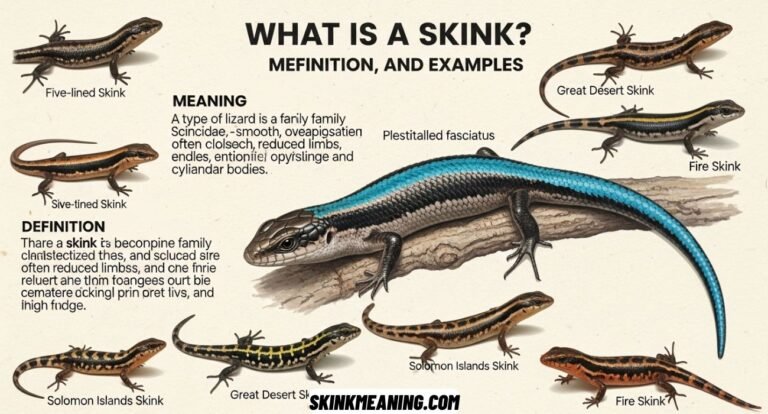
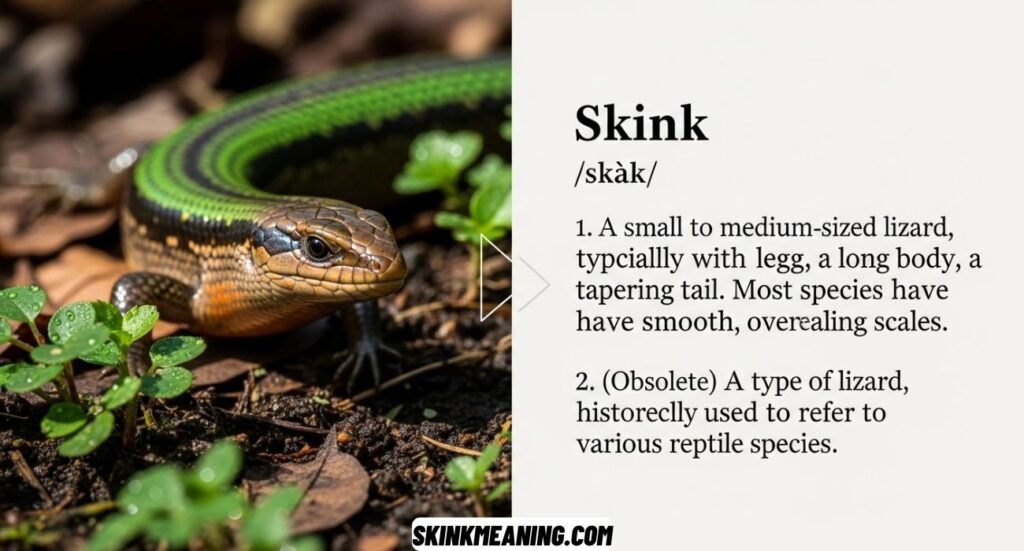
In simple terms, a skink is a small to medium-sized lizard with smooth, shiny skin and short legs. Some skinks have legs so small that they almost look like snakes. They move quickly, hide easily, and are harmless to humans.
From a language perspective, the skink definition in English refers mainly to the animal, but older meanings exist, which are explained later in this article. For most modern readers, especially in the USA, the word skink almost always means the lizard.
Skink Meaning in Zoology
In zoology, the skink meaning is very specific. Skinks belong to the reptile class, the order Squamata, and the family Scincidae. This family includes more than 1,500 species, making it one of the largest lizard families in the world.
Scientists study skinks because they are excellent examples of adaptation. Some species live underground, some climb trees, and others live in deserts. Their body shape, scales, and movement help them survive in many environments.
A zoologist once described skinks by saying:
“Skinks are nature’s proof that small changes in body design can lead to massive survival advantages.”
Why Skinks Are Classified as Lizards

Skinks are classified as lizards because they share all the major traits that define lizards. They are cold-blooded reptiles, they have scales, they lay eggs or give live birth depending on the species, and they breathe air.
Unlike snakes, skinks have eyelids and external ear openings. Even species with tiny legs still have the skeletal structure of lizards. This is why scientists clearly separate skinks from snakes, even though they may look similar at first glance.
Types of Skink Lizard Species
There are many types of skink lizard species found across continents. These species differ in size, color, habitat, and behavior. Some live only a few inches long, while others grow over a foot.
A simple numbered list of major skink groups includes:
- Ground-dwelling skinks that burrow into soil and leaf litter
- Tree-dwelling skinks that climb and hunt insects
- Desert skinks adapted to dry, hot environments
- Semi-aquatic skinks that live near water
Each group shows how flexible and successful skinks are as a species.
Common Skink Species Found Worldwide
Some skink species are especially well-known, including those commonly seen in the United States. These skinks often live near homes, gardens, and forests.
| Skink Species Name | Common Location | Notable Feature |
| Five-lined Skink | Eastern USA | Blue tail in juveniles |
| Blue-tailed Skink | Southeast Asia | Bright defensive coloring |
| Sand Skink | Florida | Lives underground |
| African Fire Skink | Africa | Red and black pattern |
These species help people recognize skinks more easily and understand their role in nature.
Physical Characteristics of Skinks
Skinks have a very recognizable appearance. Their bodies are usually long and smooth, covered with overlapping scales that look glossy. This smooth skin helps them move quickly through grass, sand, and soil.
Most skinks have short legs, though some species barely use them at all. Their tails are long and fragile, which helps them escape predators by breaking off when grabbed. This process is called tail autotomy and is a key survival skill.
Size, Color, and Skin Texture Explained
Skink size can range from just a few inches to over 20 inches in rare species. Colors vary widely and include brown, gray, black, blue, yellow, and even orange. Some skinks change color slightly as they age, especially juvenile skinks with bright blue tails.
Their skin texture is smooth and shiny due to tightly packed scales. This texture reduces friction and helps skinks escape predators easily.
Where Do Skinks Live?
Skinks live in many parts of the world, including North America, Africa, Asia, Australia, and Europe. In the United States, they are especially common in the Southeast and Midwest.
They prefer warm environments and are often found under rocks, logs, leaf piles, and in sandy soil. Some skinks live near human homes, which is why many Americans see them in their yards.
Natural Habitat and Geographic Distribution
Skinks are highly adaptable. They live in forests, deserts, grasslands, wetlands, and even urban areas. Their wide geographic distribution shows how successful they are as a reptile family.
Australia has the largest number of skink species, while the United States hosts several native species that play important ecological roles.
Behavior and Lifestyle of Skinks
Skinks are mostly active during the day, which makes them diurnal reptiles. They spend much of their time searching for food, basking in the sun, and hiding from predators.
They are generally shy animals and prefer to escape rather than fight. Skinks are solitary and do not form social groups except during mating seasons.
How Skinks Move, Hunt, and Survive
Skinks move using a combination of leg movement and body waves, similar to snakes. This allows them to move quickly through tight spaces.
They hunt mainly by sight and smell. Their survival depends on speed, camouflage, and their ability to hide or shed their tails when threatened.
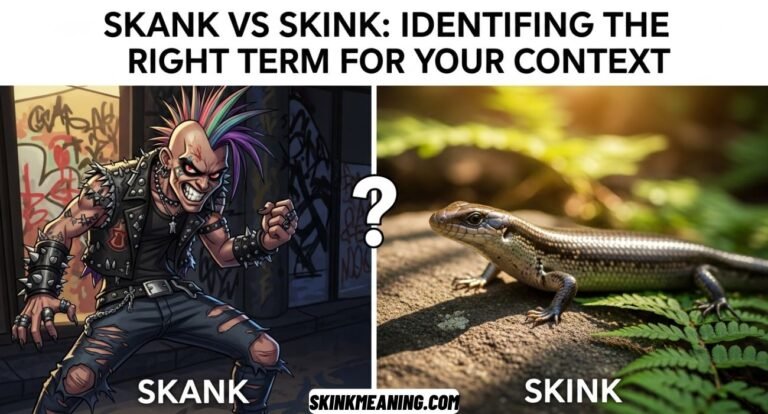
Read Also : Skank vs Skink: Identifying the Right Term for Your Context
What Do Skinks Eat?
Skinks are mostly insect-eaters, but their diet can vary by species. In the wild, they help control insect populations, which makes them beneficial to humans.
A numbered list of common skink foods includes:
- Insects such as crickets and beetles
- Spiders and worms
- Small snails
- Occasionally fruit or plant matter
Skink Diet in the Wild and Captivity
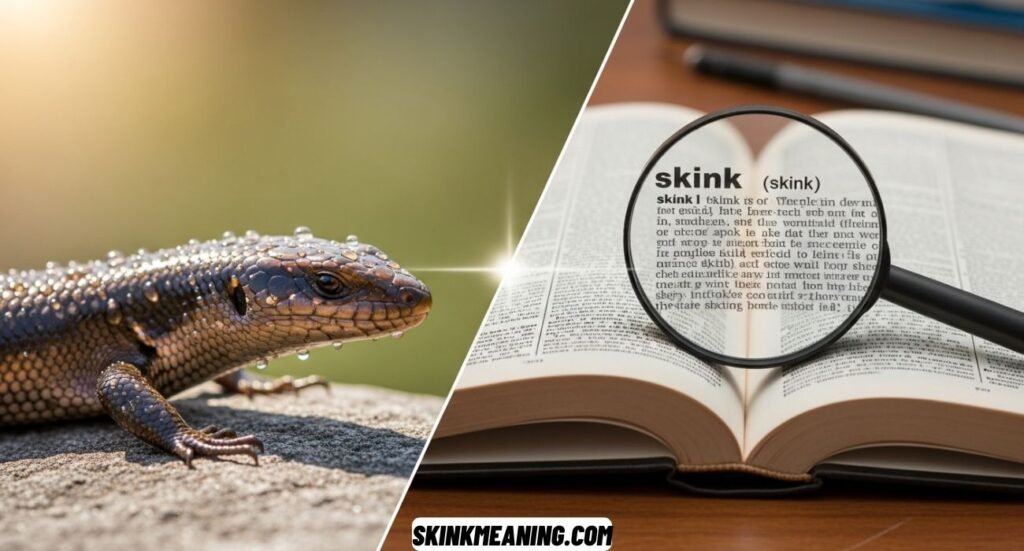
In captivity, skinks are fed diets that mimic their natural food sources. Pet skinks often eat insects, fruits, and specially prepared reptile food.
A balanced diet is essential for their health, growth, and lifespan.
Skink Meaning in the English Dictionary
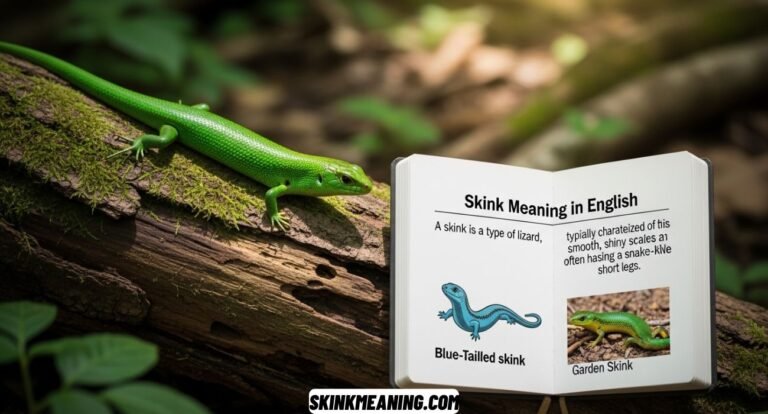
The skink meaning in the English dictionary primarily refers to the lizard. However, older dictionaries also define skink as a verb meaning “to serve drink,” which comes from historical usage.
This shows how language evolves over time while retaining older meanings in literature and records.
Word Origin and Etymology of Skink
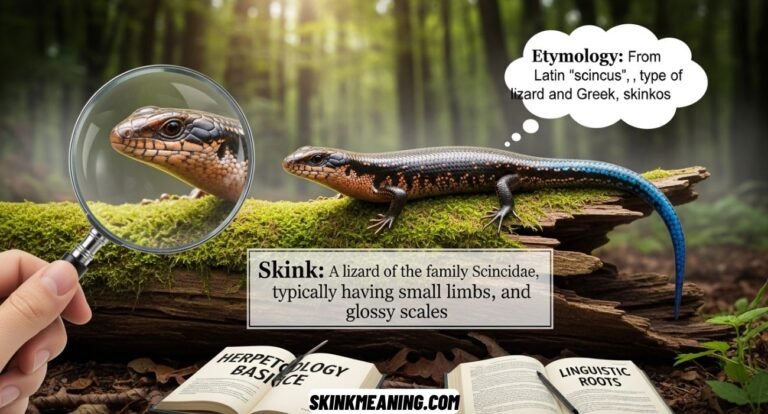
The word “skink” comes from the Greek word skinkos, which referred to a type of lizard. It passed into Latin and later into English through scientific writing.
This origin explains why the word is strongly tied to zoology and biology.
Is Skink Used as Slang or Metaphor?
In modern American English, skink is rarely used as slang. In older Scottish and British usage, it referred to pouring drinks or a tavern worker.
Today, slang usage is uncommon, and most people associate the word only with the lizard.
Cultural and Language Usage of the Word Skink
Skinks appear in educational texts, wildlife guides, and children’s books. They are rarely used metaphorically, unlike snakes or dragons.
Their cultural presence is mostly scientific rather than symbolic.
Difference Between Skinks and Other Lizards
Skinks differ from other lizards mainly in body shape, skin texture, and movement. Their smooth scales and reduced legs set them apart.
Skink vs Gecko vs Lizard Explained
| Feature | Skink | Gecko | Typical Lizard |
| Skin | Smooth and shiny | Soft and bumpy | Rough |
| Legs | Short or tiny | Well-developed | Medium |
| Activity | Daytime | Nighttime | Varies |
This comparison helps readers clearly understand the skink meaning in relation to other reptiles.
What Is a Skink and Why the Skink Meaning Matters
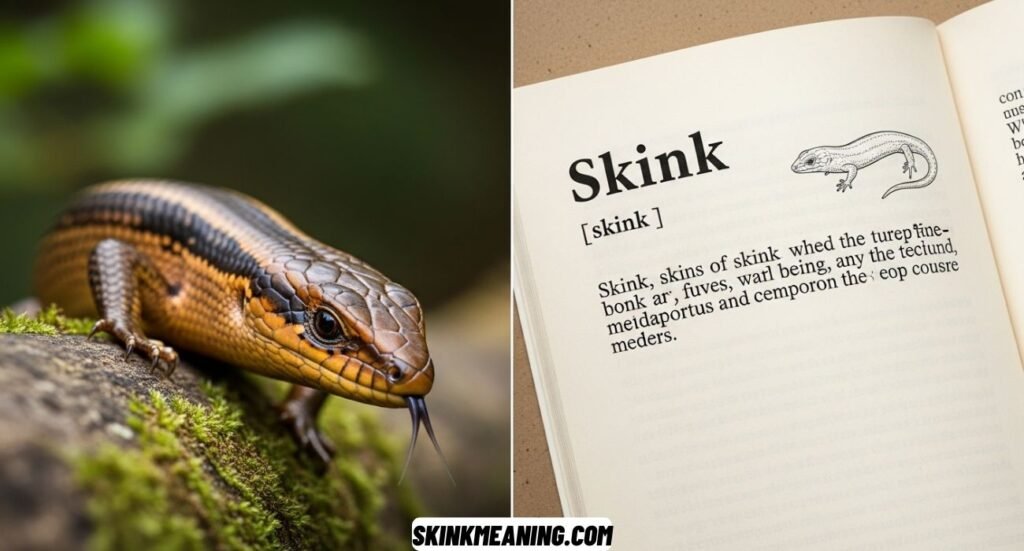
The skink meaning is important because it helps people correctly understand what this animal is and why it exists in nature. A skink is not just a random lizard but a scientifically classified reptile with unique features. Many people in the United States see skinks in gardens or parks and want to know what they are seeing and whether they are harmless.
Understanding the skink meaning also helps clear up common confusion. Some people mistake skinks for snakes or geckos, which leads to fear or misinformation. Learning the true meaning of skink builds awareness, reduces myths, and helps people appreciate these small but valuable reptiles as part of the natural environment.
Skink Meaning in Zoology and Scientific Classification
In zoology, the skink meaning refers to a lizard belonging to the Scincidae family. This family includes more than a thousand species found across the world. Scientists classify skinks based on body structure, scales, movement, and genetics. Their smooth skin and small legs are key identifiers used in reptile studies.
From a scientific view, skinks are important because they show how animals adapt to different environments. Some skinks live underground, while others climb trees or survive in deserts. Studying skinks helps researchers understand evolution, survival strategies, and how reptiles respond to climate and habitat changes.
Physical Features That Define the Skink Meaning
The physical traits of skinks strongly shape the skink meaning. Skinks usually have long bodies, short legs, and shiny scales that make them look smooth and glossy. This body design allows them to move quickly through grass, sand, and soil while avoiding predators in the wild.
Color also plays a big role in skink identification. Many skinks are brown or gray, helping them blend into their surroundings. Some young skinks have bright blue tails, which distract predators. These physical features are not random; they are survival tools developed over millions of years.
Where Skinks Live and How Habitat Shapes Their Meaning
Where skinks live adds depth to the skink meaning. Skinks are found on almost every continent, including North America, Africa, Asia, and Australia. In the United States, they are commonly seen in warm areas like forests, grasslands, and suburban yards with rocks or wood piles.
Their habitat shapes their behavior and appearance. Skinks living in dry areas burrow into soil to avoid heat, while forest skinks hide under leaves and logs. This ability to adapt to many habitats explains why skinks are so widespread and successful as a lizard species.
Behavior and Lifestyle Behind the Skink Meaning
The skink meaning is also defined by behavior. Skinks are usually active during the day and spend time basking in the sun to regulate body temperature. They are shy animals and prefer to run away or hide rather than confront threats, which makes them harmless to humans.
Skinks live mostly solitary lives and only interact with others during mating season. Their daily routine includes hunting for food, avoiding predators, and finding shelter. These behaviors show how skinks survive quietly and efficiently without disrupting human environments.
What Skinks Eat and Their Role in Nature

Diet plays an important role in understanding the skink meaning. Most skinks eat insects like beetles, crickets, and spiders. Some species also eat fruits or plants when insects are scarce. This flexible diet helps skinks survive in many different environments.
Because skinks eat large numbers of insects, they help control pest populations. This makes them beneficial to gardens and farms. By reducing harmful insects, skinks support natural balance and show why they are valuable members of local ecosystems.
Skink Meaning in the English Dictionary and Language
The skink meaning in the English dictionary mainly refers to the lizard. However, older definitions show that the word once had other uses. In historical English and Scottish language, skink was used as a verb meaning to pour or serve drinks.
Today, this older meaning is rarely used in American English. Most people associate the word skink only with the animal. This shift shows how language evolves over time, keeping some meanings while letting others fade away.
Why the Skink Meaning Is Important Today
The skink meaning matters today because it connects science, language, and everyday life. Knowing what a skink is helps people respect wildlife instead of fearing it. Education about skinks also encourages conservation and protects species that are often misunderstood.
Skinks may be small, but their role is big. They help ecosystems stay healthy, support biodiversity, and teach humans about adaptation and survival. Understanding the full skink meaning helps us see how even small creatures have an important place in the world.
FAQs
What does skink mean?
Skink means a type of smooth-skinned lizard found in many parts of the world. In older English, it also meant to serve or pour drinks.
What does the skink symbolize?
A skink symbolizes adaptability and survival because it escapes danger quickly. It often represents flexibility and resilience in nature symbolism.
What exactly is a skink?
A skink is a reptile from the Scincidae family with smooth scales and short legs. It is harmless and commonly found in warm regions.
What is a skink in British slang?
In British slang, skink is an old word meaning to pour or serve alcohol. This usage is now rare and mostly historical.
Conclusion
Skinks are small lizards with smooth skin and quick movement. They live in many parts of the world, including the United States. They help nature by eating insects and keeping balance in the environment. People often confuse skinks with snakes, but skinks are harmless and helpful animals. Learning about skinks builds respect for wildlife and supports care for nature. Simple knowledge can remove fear and spread understanding among young learners and adults.
Skink Meaning Uncovered explains both the animal and the word clearly. The word skink comes from old languages and now mainly means a type of lizard. This meaning connects science, language, and daily life. Skinks show how small creatures can play big roles in nature. Understanding skinks encourages kindness toward animals and supports learning about the natural world.